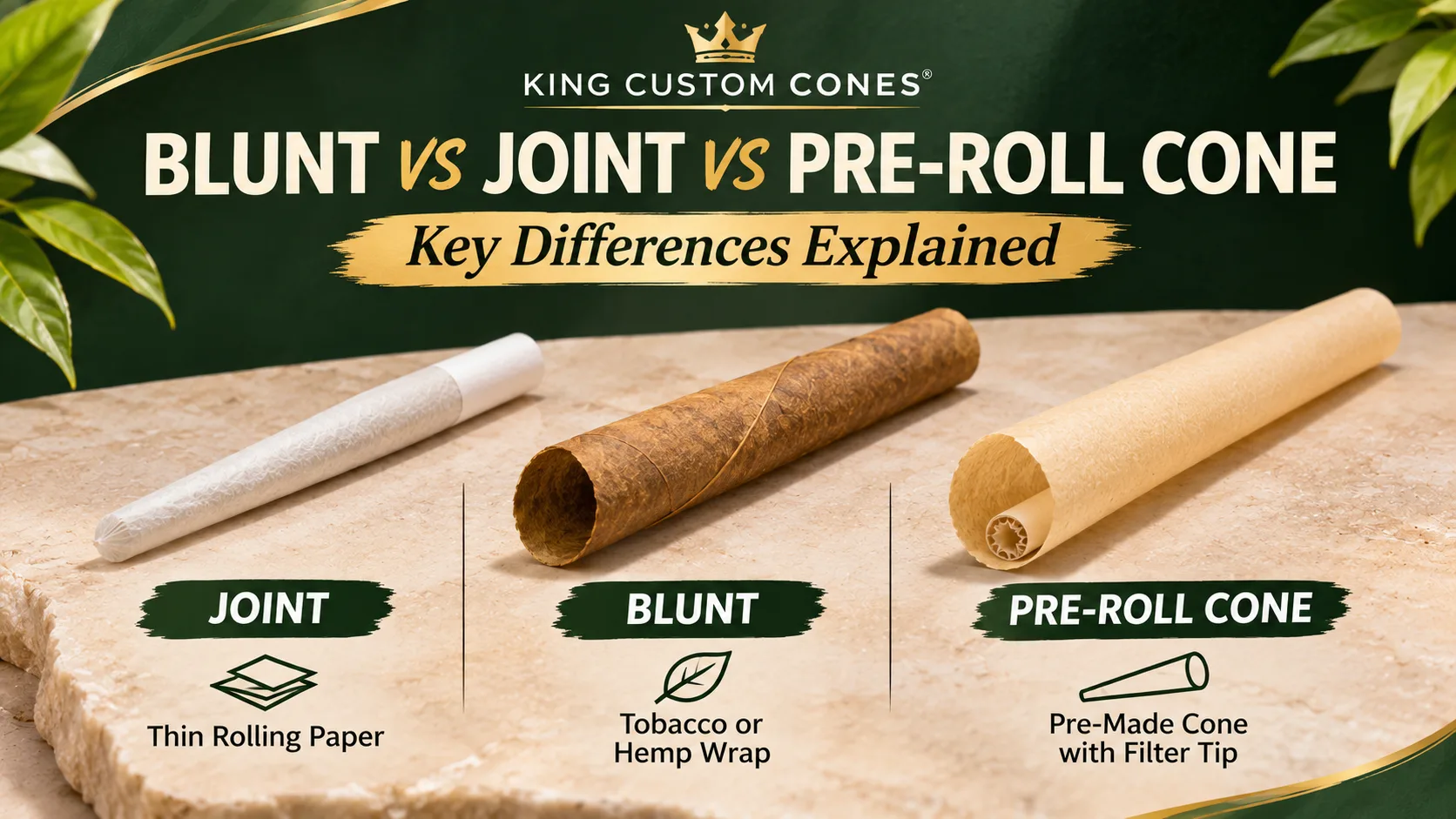
The difference comes down to the wrap. A joint is rolled in thin rolling paper. A blunt is rolled in a thicker leaf wrap, either tobacco or tobacco-free hemp. A pre-roll cone is the ready-made shell that lets you make either one without hand rolling.
That wrap choice changes everything else: size, burn time, flavor and price. For shoppers, it shapes the smoking experience. For cannabis brands and dispensaries, it decides which products you stock, how you fill them and what you charge.
This guide breaks down all three side by side. You will see how each one is made, how they compare, and which format fits your pre-roll line.
Blunt vs Joint vs Pre-Roll Cone at a Glance
In the joint vs blunt comparison, joints are light and fast burning, blunts are heavy and slow, and pre-roll cones can be either one, depending on the wrap you choose.
|
Feature |
Joint |
Blunt |
Pre-roll cone |
|---|---|---|---|
|
Wrap |
Thin rolling paper (wood pulp, hemp or rice) |
Tobacco leaf or tobacco-free hemp wrap |
Pre-shaped paper or hemp wrap |
|
Typical fill |
0.3g to 1g |
1g to 2g or more |
0.3g to 2g, set by cone size |
|
Burn speed |
Fast |
Slow |
Paper is faster, hemp wrap is slower |
|
Flavor |
Light, lets the flower lead |
Earthy and bold from the wrap |
Matches the wrap chosen |
|
Nicotine |
None |
Yes with tobacco, none with hemp |
None |
|
Filter |
Optional crutch or tip |
Usually none, sometimes a tip |
Built in (paper, glass, ceramic or wood) |
|
How it's made |
Hand rolled |
Hand rolled |
Filled by hand or by machine |
|
Best for |
Everyday sessions, 0.5g to 1g SKUs |
Long group sessions, premium SKUs |
Consistent, scalable pre-roll production |
What Is a Joint?
A joint is ground cannabis rolled in thin rolling paper. It is the most common way to smoke flower, and it is the format most pre-rolls on dispensary shelves are built on.
Rolling papers come in three main materials:
-
Wood pulp paper. Bleached versions are bright white, while unbleached versions are natural brown.
-
Hemp paper. Slightly textured, slow and even burning, and popular with natural-leaning brands.
-
Rice paper. Very thin with almost no taste, though it can burn fast.
Most joints hold between 0.3g and 1g of flower. Many include a filter tip, also called a crutch, which keeps the end firm and stops flower from reaching the smoker's mouth.
Joints are light, quick to smoke and let the flower's own flavor come through. That is why they remain the default format for everyday pre-rolls. If you want the paper choice explained in depth, see our guide on white vs brown pre-roll cones.
What Is a Blunt?
A blunt is cannabis rolled in a thick leaf wrap instead of paper. Traditionally, people emptied a cigar and refilled its tobacco leaf wrapper with flower. Today, many cannabis brands use tobacco-free hemp wraps instead.
There are two main kinds of blunt wrap:
-
Tobacco leaf wraps. The classic cigar-style blunt. The wrap contains nicotine, which some smokers want and many brands avoid.
-
Hemp wraps. Made from pressed hemp, with no tobacco and no nicotine. They keep the slow burn and bold look of a blunt. Brands carry them in brown and green hemp wrap blunts.
Blunts are bigger than joints, usually holding 1g to 2g or more. The thick wrap burns slowly, so one blunt lasts much longer and suits group sessions. The wrap also adds its own earthy, sometimes sweet, flavor.
For brands, blunts carry a higher shelf price than standard joints. That premium makes pre-rolled blunts a strong add-on to any pre-roll menu.
What Is a Pre-Roll Cone?
A pre-roll cone is a paper or hemp wrap that comes already rolled into a cone shape, with the filter built in. You fill it with ground flower, pack it and close the top. A filled cone is what dispensaries sell as a "pre-roll."
The cone is not a third type of smoke. It is a faster way to make the first two:
-
A paper cone makes a joint. Choose French White, Unrefined Brown or 100% Organic Hemp paper for a classic joint.
-
A hemp wrap cone makes a blunt. Hemp wrap blunt cones give you a tobacco-free blunt with no hand rolling.
Cones are why pre-rolls can be produced at scale. Every cone has the same shape, length and paper tension, so each finished pre-roll looks and burns the same. They also fit filling machines, which fill dozens or hundreds of cones in one cycle.
Cones come in set sizes, from the small 70mm Dogwalker to the 109mm King Size. To match a size to your fill weight, see how to choose the right pre-roll cone size.
5 Key Differences Between a Blunt and a Joint
1. Wrap material
This is the core difference. Joints use thin paper, and blunts use a thick leaf wrap. Everything else on this list follows from that choice.
2. Size and fill weight
Joints usually hold 0.3g to 1g, while blunts hold 1g to 2g or more. The thicker wrap needs more flower to roll and pack well. For exact fill ranges by cone size, read pre-roll fill weights explained.
3. Burn time
Thin paper burns quickly, so a joint is a shorter session. A blunt's thick wrap burns slowly and evenly, which makes it last much longer.
4. Flavor
A joint lets the strain's terpenes lead, especially with thin, refined paper. A blunt wrap adds a heavier, earthy taste that mixes with the flower.
5. Tobacco and nicotine
Paper joints contain no tobacco. Traditional blunts use tobacco leaf, so they contain nicotine. Hemp wrap blunts remove the tobacco while keeping the blunt look and slow burn. That is why many dispensaries stock hemp wrap blunts as a tobacco-free option.
What about the filter? Joints and blunts are often rolled without one. Pre-roll cones include one built in, from standard paper filters to glass tips and ceramic tips. Compare them in glass vs ceramic vs wood vs spiral tips.
Joint or Blunt: Which Should Your Brand Produce?
Most brands should build their line on paper cones and add hemp wrap blunt cones as a premium tier. Paper cones keep costs low on everyday SKUs, while blunts earn a higher shelf price.
|
Your goal |
Best format |
Cones to start with |
|---|---|---|
|
Everyday 0.5g to 1g pre-rolls |
Paper cone (joint) |
|
|
Premium, slow-burning SKU |
Hemp wrap cone (blunt) |
|
|
Tobacco-free blunt option |
Hemp wrap cone (blunt) |
|
|
Multi-packs and samplers |
Small paper cone (joint) |
|
|
Shelf standout or brand launch |
Custom printed cone |
Cost. Hemp wrap blunt cones cost about twice as much per cone as standard paper cones. Their higher retail price usually covers that gap.
Production. Paper cones and hemp wrap cones both fit standard filling machines. That lets you run joints and blunts on the same line with no hand rolling. Our guide on how to set up a pre-roll production line covers the equipment.
Branding. Both formats can carry your logo. Preview your design for free in the 3D Cone Builder, then compare options in custom blunt cones vs regular.
Ready to stock both? Apply for a wholesale account, order a free sample box to test fit on your line, or request a quote for bulk pricing.
Frequently Asked Questions
What's the difference between a blunt and a joint?
A joint is rolled in thin rolling paper, and a blunt is rolled in a thick tobacco leaf or hemp wrap. Blunts are usually bigger, burn slower and have a stronger wrap flavor.
Is a pre-roll a joint or a blunt?
It can be either. A pre-roll made with a paper cone is a joint. A pre-roll made with a hemp wrap cone is a blunt.
Do blunts have tobacco in them?
Traditional blunts use a tobacco leaf wrap, so they contain nicotine. Hemp wrap blunts contain no tobacco and no nicotine.
Which is bigger, a blunt or a joint?
Blunts are bigger. Most joints hold 0.3g to 1g of flower, while blunts usually hold 1g to 2g or more.
Which burns longer, a blunt or a joint?
A blunt burns longer because its thick wrap burns slowly. Joints use thin paper and burn faster.
What is a pre-rolled blunt cone?
A pre-rolled blunt cone is a hemp wrap shaped into a cone, ready to fill. It gives you a blunt without hand rolling. Browse hemp wrap blunt cones.
Can I make joints and blunts on the same filling machine?
Yes. Paper cones and hemp wrap cones in standard sizes fit common cone filling machines, so one line can produce both formats.